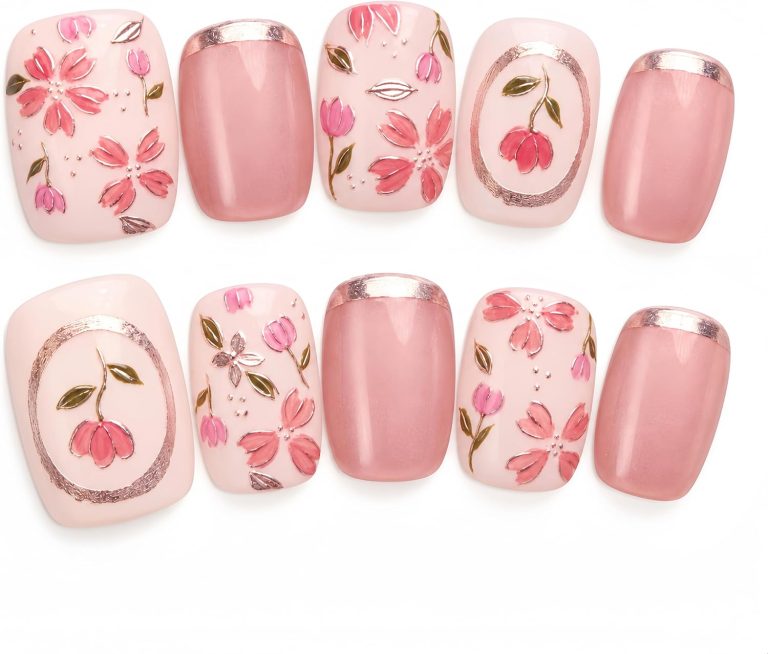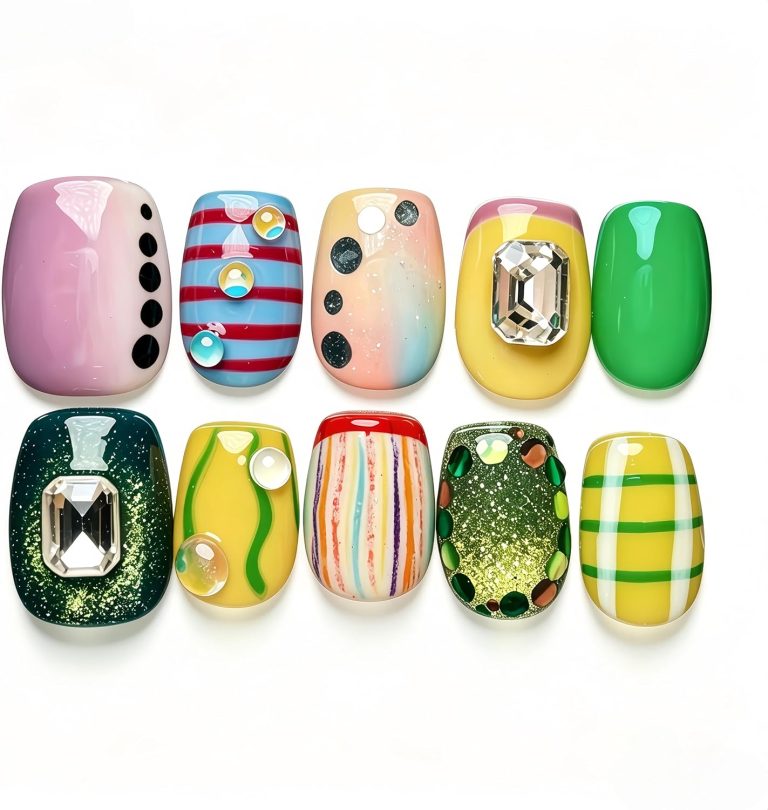
Quick answer: If you type most of the day, start with a press-on set whose actual length and fit let your finger pads reach the keys comfortably. Practice on your own keyboard before a busy workday. Short designs can be easier to adapt to than longer ones, but the right choice depends on your hands, keyboard and tasks.
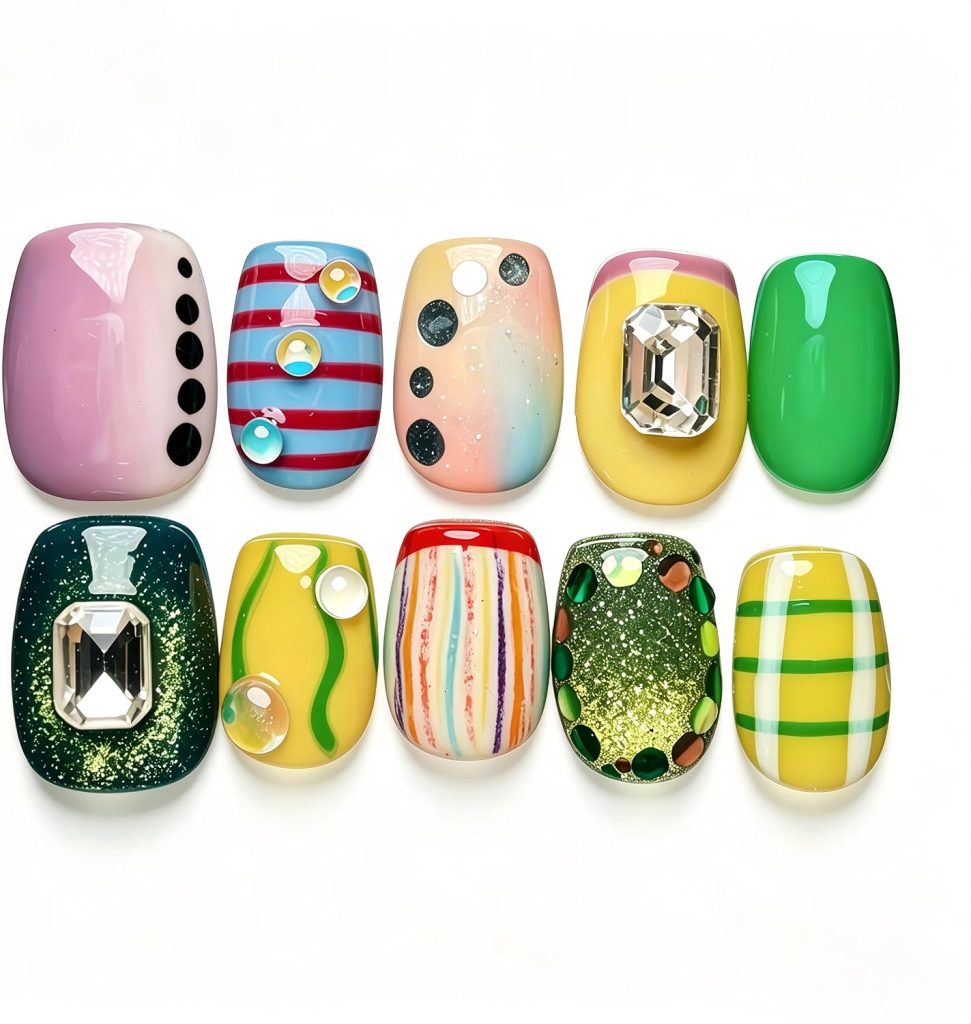
Start with length you can work in
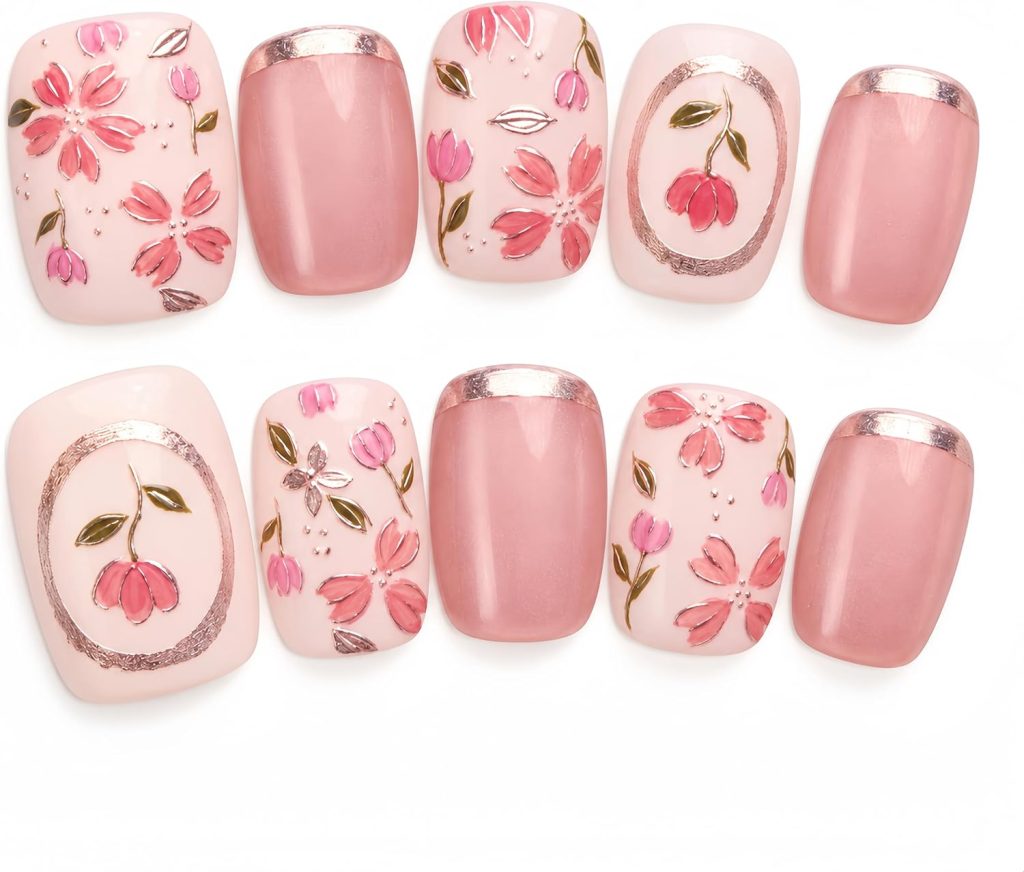
“Short” is a product description, not a promise that every keyboard will feel the same. Compare the finished-on-hand photos and the amount of tip extending beyond the fingertip. If you have never typed with press-ons, a shorter option can be a less dramatic change. Our collection includes short squoval and short ballerina designs, but color, 3D detail and each design’s available sizes vary. See the shape comparison for examples.
Test the set before an important day
- Check all ten tip widths with our size guide and dry-fit the physical set. A tip that pinches or rocks will not become comfortable because you type more carefully.
- Apply the set according to the glue or tab instructions supplied with that particular product. Do not use the nail itself as a tool to press keys or open packages.
- Try a short typing session on the keyboard you actually use. Aim to use the pads of your fingers where comfortable, rather than striking keys with the decorative nail tips.
- If the nail catches neighboring keys, slow down and reassess the length. If a finger or nail hurts, stop and remove the set safely rather than working through pain.
What if my laptop keyboard still feels awkward?
People adapt differently to low-profile laptop keys and raised desktop keyboards. A change in finger angle may help, but it should not strain your hands. If a particular set makes routine work difficult, a shorter design or no press-ons during that task may be the better choice. Avoid clipping or filing across Fine Point’s handmade art or 3D details just to make a set shorter; that can damage the finish. Choose the intended length before ordering when possible.
Do shape and adhesive matter?
Outline affects where the tip meets a key, but there is no universally “typing-proof” shape. A short squoval may appeal to someone wanting a softly squared tip; a short ballerina narrows toward a flatter end. Fit, length, the amount of embellishment and your own technique matter more than the name alone. Glue and tabs also feel different to some wearers; use our adhesive comparison and the instructions in your kit rather than assuming one method always works better for keyboards.
Desk-day checklist: Choose a comfortable width and curve, check the real on-hand length, leave yourself time to practice, and keep a safe removal plan. If a tip lifts during the day, do not keep typing with it catching on keys; address the loose nail first.